

90% of Traders LOSE Money: The TRUTH ‘Academies’ Conceal 📉
Originally published by Carrera Financiera. Comprehensive and structured analysis for in-depth reading.
The UNCOMFORTABLE TRUTH: Why 90% of Traders LOSE MONEY (and what ‘academies’ won’t tell you)
90% of those who attempt to trade in the markets lose money, and the annual losses of retail traders exceed $1 billion. “Academies” sell a dream, but hide the harsh reality: the system is designed for you to fail. Today, we reveal why.
The Harsh Reality of the Retail Trader: An Unfair Battlefield
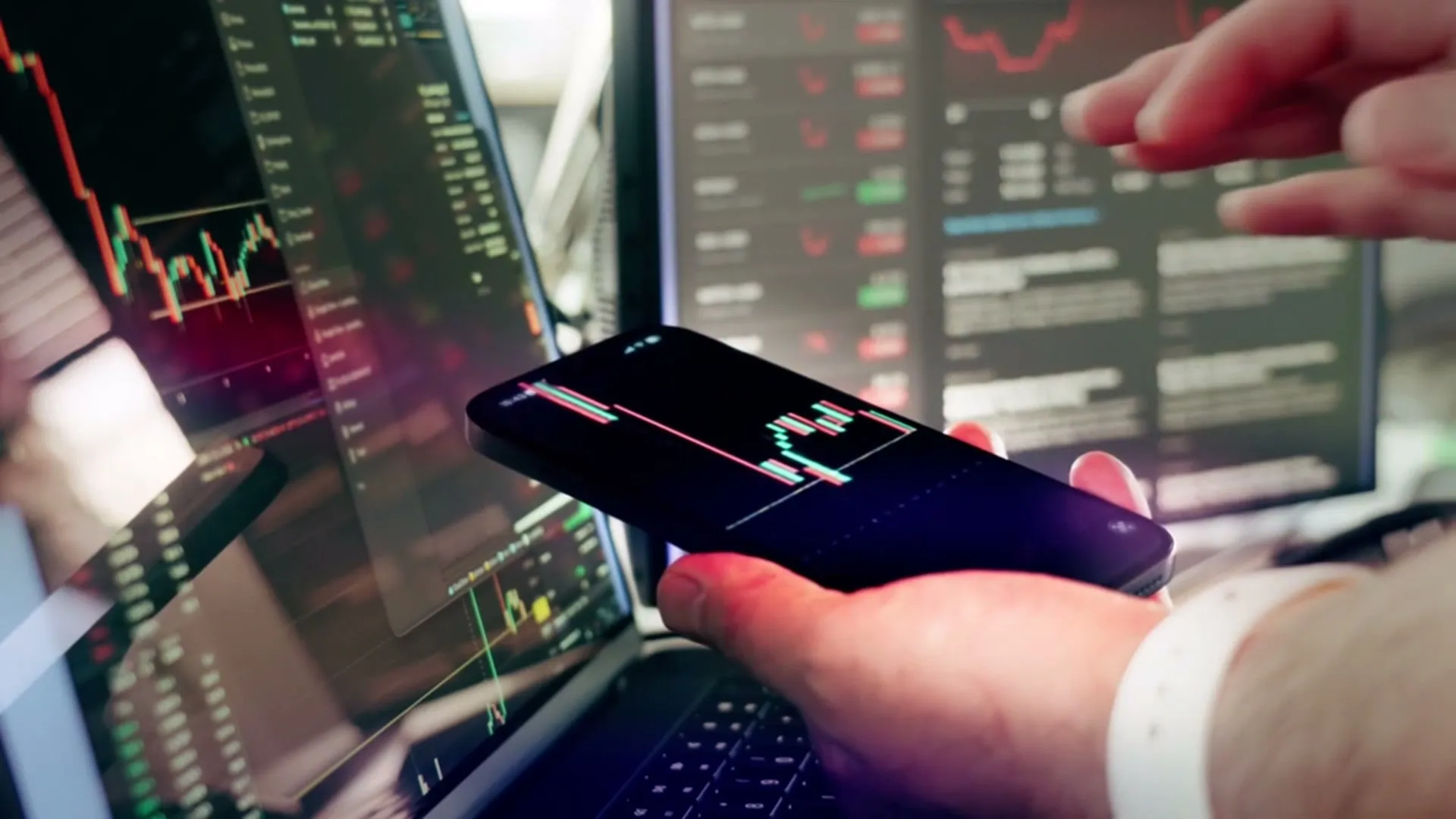 Figure 1: Visual detail and technical analysis corresponding to The Harsh Reality of the Retail Trader: An Unfair Battlefield.
Retail trading is marketed as a fast track to financial freedom, but the data paints a bleak picture. Studies by regulators like ESMA and reports from brokers such as Interactive Brokers or eToro consistently reveal that between 70% and 90% of their retail clients lose money every quarter. This isn’t an anomaly; it’s the norm.
This statistic is no accident. The individual trader enters an ecosystem dominated by giants with insurmountable structural, technological, and capital advantages. It’s like an amateur chess player facing a Grandmaster, but with the Grandmaster having access to a supercomputer and seeing your moves before you make them.
The narrative of “anyone can do it” ignores that financial markets are a high-tech, capital-intensive battlefield. Institutions invest millions in infrastructure, low-latency algorithms, and teams of data scientists. The retail trader, with their laptop and internet connection, is at an abysmal disadvantage.
Furthermore, information is not symmetrical. While large funds have access to premium market analysis, alternative data, and legally obtained privileged information networks, the retail trader relies on public news, social media analysis, and often, information already discounted by the market.
This informational and technological asymmetry creates an environment where a competitive “edge” is almost non-existent for the small investor. The illusion of a level playing field is the first major deception that “academies” perpetuate, promising that with a couple of indicators and a bit of discipline, one can beat the system.
The Structural Advantage: When the Market Isn’t a Zero-Sum Game for Everyone
 Figure 2: Visual detail and technical analysis corresponding to The Structural Advantage: When the Market Isn’t a Zero-Sum Game for Everyone.
Popular belief holds that the market is a zero-sum game: what one person gains, another loses. But for large institutions, the game isn’t so simple. High-frequency trading (HFT) firms, market makers, and quantitative funds have a systemic “edge” that allows them to consistently extract value.
HFTs, for example, operate with microsecond latencies, executing thousands of trades per second. Their advantage isn’t predicting the future, but exploiting temporary inefficiencies and minimal price differences between various exchanges. They can arbitrage a price before your order even reaches the market.
This speed allows them to “see” retail orders before they are fully executed and position themselves accordingly. They buy at the best price they see and sell a microsecond later at a slightly higher price, earning a small profit on each transaction, which, multiplied by millions, amounts to fortunes.
Market makers, for their part, profit from the bid-ask spread, the difference between the price at which they buy and sell an asset. They provide liquidity to the market, yes, but their business is to capture that difference consistently, and their technology allows them to manage inventory risk in a sophisticated way.
If you’re looking to master the tools and models that separate junior analysts from elite salaries, subscribe to the channel: each week we break down quantitative strategies and high-level finance.
The flow of retail orders is a valuable asset. Many retail brokers sell this order flow to large trading firms, which use it to optimize their own strategies and gain a predictive advantage over market direction. Your “market order” is information that someone else uses for their benefit.
In this scenario, the retail trader not only competes against other traders but against automated systems and entities with computing power and access to information that redefine the fairness of the game. It’s not a conspiracy; it’s the architecture of the modern market.
The Psychological Trap: Cognitive Biases and the Illusion of Control
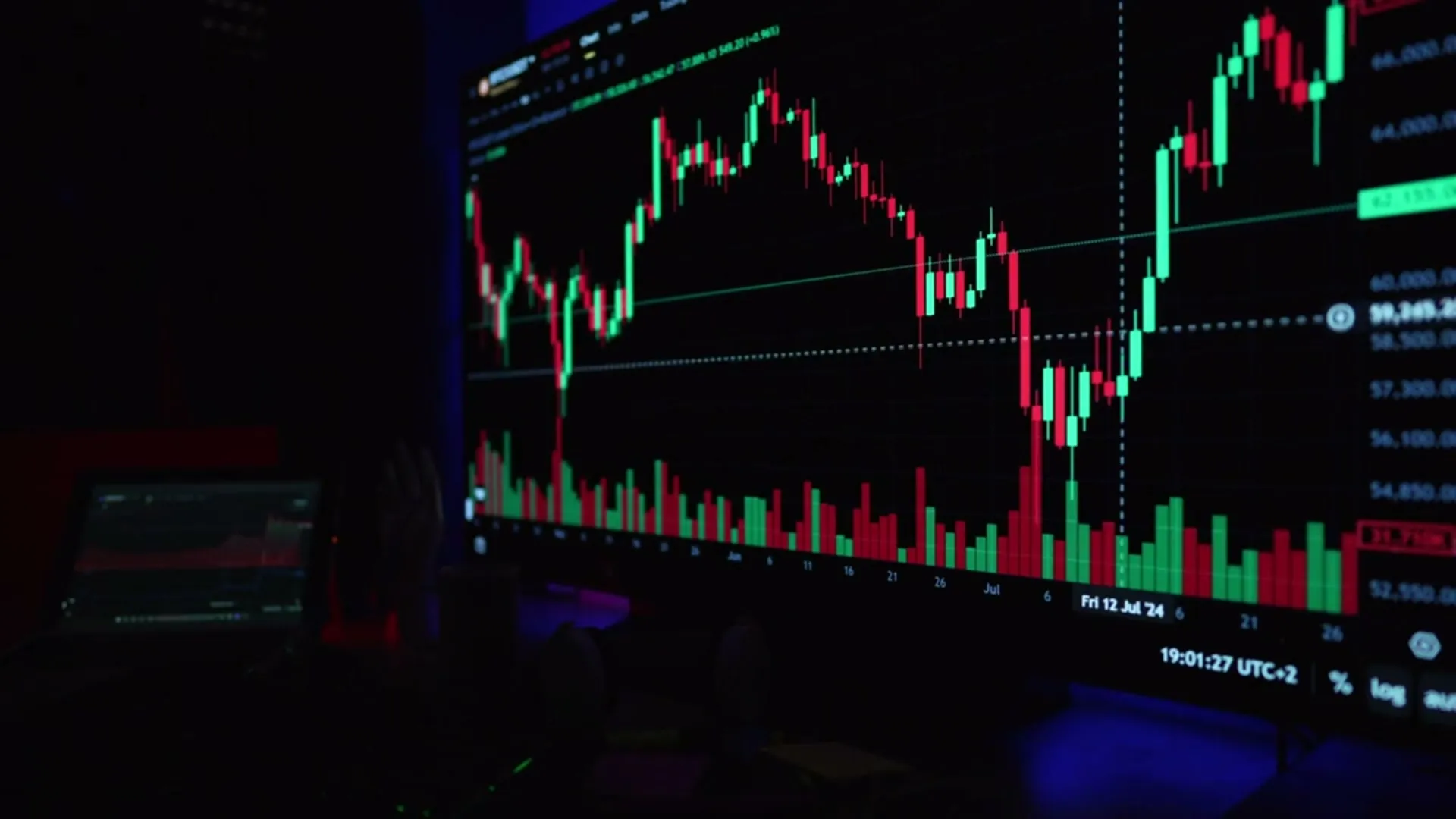 Figure 3: Visual detail and technical analysis corresponding to The Psychological Trap: Cognitive Biases and the Illusion of Control.
Even with the right tools, the human mind is the biggest obstacle. Trading demands a discipline and objectivity that contradict our evolutionary programming. Deeply ingrained cognitive biases push us towards irrational decisions again and again.
Loss aversion is one of the most potent. We feel the pain of a loss twice as intensely as the pleasure of an equivalent gain. This leads to holding losing positions for too long, hoping for a recovery that rarely comes, and closing winning positions prematurely.
Confirmation bias makes us seek out and favor information that confirms our pre-existing beliefs, ignoring those that contradict them. If we believe a stock will go up, we will only see news and analysis that support that idea, blinding us to the risks.
Overconfidence, especially after a winning streak, leads us to take excessive risks, increase position sizes, or deviate from our plan. We believe we are invincible, until the market brings us back to reality with a harsh lesson.
The fear of missing out (FOMO) drives us to enter trades already in progress, chasing price movements that have already occurred, usually at the peak, only to see the market reverse against us. Collective euphoria is a deadly trap.
Overcoming these biases is not a matter of willpower, but of self-awareness, rigorous planning, and a trading system that minimizes emotional decision-making in real-time. It’s a battle against oneself, more than against the market.
The Implacable Math: Risk, Reward, and the Illusion of Probability
 Figure 4: Visual detail and technical analysis corresponding to The Implacable Math: Risk, Reward, and the Illusion of Probability.
Many traders obsessively focus on finding the “perfect strategy” with a high win rate, but ignore the fundamental math of trading: mathematical expectancy and risk management. A strategy with a 60% win rate can be a losing one if losses are much larger than gains.
Mathematical expectancy (Expectancy = (Probability of Winning * Average Win) - (Probability of Losing * Average Loss)) must be positive for a strategy to be profitable in the long run. If your expectancy is negative, every trade brings you closer to ruin, no matter how many “wins” you have.
Risk management is the pillar. How much capital are you willing to lose on a single trade? The golden rule is never to risk more than 1% or 2% of your total capital on a single trade. This protects your account from inevitable losing streaks and allows you to stay in the game.
Many traders, driven by greed or desperation, increase their position sizes beyond what is prudent. A streak of five or ten losing trades, which is common, can decimate an account if 10% is risked per trade, quickly leading to “gambler’s ruin.”
The concept of “drawdown” (the maximum decline from a capital peak) is crucial. A 50% drawdown requires a 100% gain just to get back to the starting point. Recovering from large drawdowns is exponentially more difficult and demoralizing.
Probability is not a guarantee on the next trade; it’s an average over hundreds or thousands of trades. Understanding this and applying ironclad risk management is what differentiates traders who survive from those who evaporate. “Academies” often simplify this or ignore it completely.
The ‘Academy’ Business: Selling Shovels in a Gold Rush
In the gold rush of trading, the most profitable business isn’t finding gold, but selling shovels. “Trading academies” and “gurus” have built a multi-million dollar industry selling courses, signals, and unrealistic hopes to an audience desperate for a quick solution to their financial problems.
The business model of many of these academies is not based on the success of their students, but on the sales volume of their products. Their “success stories” are often unverifiable anecdotes, and they rarely present transparent statistics on the percentage of their students who actually achieve sustainable profits.
Often, these academies promote overly simplified trading strategies, such as “magic patterns” or “infallible indicators,” which may work randomly in backtesting but lack a robust statistical basis or a deep understanding of market microstructure.
Aggressive marketing, the creation of a false sense of urgency, and appeals to emotion (“escape your 9-to-5 job,” “be your own boss”) are common tactics. They focus on the “dream” and minimize the difficulties, risks, and the amount of work and capital actually required.
Furthermore, many of these “academies” operate in a regulatory gray area, and their “educators” often lack formal financial credentials or real institutional experience. Their primary skill is marketing and sales, not investment or professional trading.
The truth is that trading is a highly specialized profession, requiring years of study, practice, capital, and a robust mindset. It’s not learned in a weekend course or by following signals from a “guru.” Academies, in many cases, sell the illusion of a shortcut, diverting aspirants from the true path of learning and discipline.
Verdict and Strategic Lesson
90% of retail traders lose money due to a lethal combination of structural disadvantages, psychological traps, a poor understanding of risk mathematics, and often, misinformation spread by “academies” that capitalize on desperation and naivety. This is not a fair game for the amateur.
The verdict is clear: trading is not a quick path to wealth for most. It is a professional, demanding discipline that requires significant capital, rigorous education in quantitative finance, statistics, and programming, and exceptional mental fortitude. The “get rich quick” fantasy is a dangerous mirage.
The strategic lesson is this: if your goal is to generate wealth, focus on what works. Invest in your real financial education, understand intrinsic value, seek long-term investment opportunities with a fundamental advantage, and diversify. Build wealth; don’t risk it in a casino where the odds are stacked against you.
For those who still aspire to trading, the path is one of professionalization: understanding market microstructure, developing a statistically validated “edge” with robust backtesting, mastering risk management like an institutional fund manager, and, above all, brutal self-awareness to combat biases. Don’t look for shortcuts; seek mastery. True financial success is built with patience, knowledge, and discipline, not with empty promises.
⚖️ Legal Notice & Disclaimer (Financial Disclaimer):
The content presented in this article is strictly for educational, informational, and professional analysis purposes. The information contained herein does not constitute, under any circumstances, personalized financial advice, investment recommendations, or legal or tax advice. Any economic, educational, or investment decisions you make are solely your responsibility. Always consult a certified financial advisor or professional before committing capital.
📺 Watch the Video Analysis
If you prefer to consume this content in audiovisual format with detailed graphics and step-by-step explanations, we invite you to watch our video on YouTube:
-> ▶️ Watch the full video on YouTube
Interactive Brokers (IBKR)
La plataforma institucional de referencia para profesionales y gestores: acceso a más de 150 mercados globales, custodia regulada (SEC, FINRA, FCA) y comisiones ultrabajas en acciones, ETFs y futuros.
¿Prefieres el análisis en formato audiovisual?
We publish quantitative analysis, FinTech trends, and high-demand financial career skills every week.

About Equipo Carrera Financiera
Equipo editorial de Carrera Financiera dedicado a la investigación de mercados, modelos cuantitativos y habilidades profesionales de alto valor.
Artículos Relacionados
Ver todos ↗
Index Funds vs. Active Management: Who Will DOMINATE Your Wealth and Career? 📈💰
At the core of the financial debate, the choice between index funds and active management shapes not only wealth but also the professional future of millions. This video addresses the crucial question for investors and finance professionals: who will make you rich?

🚨 Investment Banking: The HIDDEN COSTS That Are DESTROYING Your Capital
In the intricate world of investment banking and wealth management, a brutal, systematically silenced truth lurks: hidden costs devour your capital long before you see any gains. From deceptive management fees...