

Index Funds vs. Active Management: Who Will DOMINATE Your Wealth and Career? 📈💰
Originally published by Carrera Financiera. Comprehensive and structured analysis for in-depth reading.
Index Funds vs. Active Management: Who Will MAKE YOU RICH in the Next DECADE? The Final Verdict
Millions of investors lose a fortune annually by choosing the wrong strategy. In the next decade, the decision between index funds and active management will define not only your wealth but also your career. This video reveals who generates real wealth.
The Elite Investor’s Dilemma: Passive Wealth vs. Active Alpha
 Figure 1: Visual detail and technical analysis corresponding to The Elite Investor’s Dilemma: Passive Wealth vs. Active Alpha.
At the epicenter of modern financial debate, two investment philosophies vie for supremacy: the efficiency of index funds and the promise of alpha offered by active management. For a finance professional, this choice transcends mere capital allocation; it directly impacts salary trajectories and professional advancement. Understanding their fundamentals is key.
Index funds, popularized by figures like John Bogle, replicate the performance of an underlying market index, such as the S&P 500. Their primary appeal lies in minimal costs and inherent diversification, eliminating the need for individual stock analysis. This simplicity is their greatest strength, but also their limitation for those seeking superior compensation.
Active management, on the other hand, seeks to outperform the market through stock selection, market timing, or sophisticated portfolio construction. Behind this strategy operate teams of quantitative analysts, portfolio managers, and traders who employ complex models, fundamental analysis, and advanced algorithms. This approach demands exceptional talent.
The promise of active management is to generate “alpha,” a risk-adjusted return superior to a benchmark index. However, this alpha potential comes with higher costs and the constant challenge of justifying those fees. The crucial question is whether the human and technological talent behind this strategy can consistently beat the market.
Historically, most actively managed funds fail to outperform their benchmark indices after fees. This fact has fueled the narrative that passive investing is the safest route to long-term wealth for the retail investor. However, for the professional, the landscape is much more nuanced and strategic.
The difference between these two strategies is not just about returns, but also compensation structure and career opportunities. While index funds minimize human intervention, active management is an employment engine for brilliant minds seeking seven-figure salaries. It is the arena where the most lucrative careers in the financial sector are forged.
Index Funds: The Path of Low Cost and Wealth Scalability
 Figure 2: Visual detail and technical analysis corresponding to Index Funds: The Path of Low Cost and Wealth Scalability.
Index funds, or ETFs that replicate indices, represent a democratization of low-cost investing. Their primary appeal lies in simplicity: by purchasing an ETF that tracks the S&P 500, one acquires a proportional stake in 500 of the largest U.S. companies, without the need for exhaustive analysis of each. This is ideal for the passive investor.
Instant diversification and minimal management fees are their greatest advantages. A typical index fund might charge an annual fee of just 0.03% or 0.05%, which contrasts sharply with the 1% or more demanded by actively managed funds. In the long run, this cost difference translates into a significant increase in accumulated wealth.
For the individual investor, this strategy is powerful. It allows for building a solid wealth foundation with minimal effort, freeing up time for other activities or to focus on active income generation in their professional career. The scalability is enormous: it’s easy to invest from 10,000,000 with the same efficiency.
However, from the perspective of an elite finance career, passive management offers few direct opportunities. The teams behind these funds are small and highly automated, with a focus on technological infrastructure and operational efficiency. Roles are more technical and engineering-focused than market analysis or portfolio management.
Salaries in this segment, while competitive for software engineers or operations specialists, rarely reach the compensation levels seen in active management or investment banking. A senior engineer at an ETF provider might earn between 250,000 annually—an excellent income, but with a more defined ceiling.
This model is ideal for the investor, but not for the ambitious professional seeking to generate alpha and be rewarded for it. Passive management is a well-oiled machine that requires maintenance, not market creativity. Its goal is to replicate the market, not outperform it, which inherently limits the added value a manager or analyst can provide.
If you’re looking to master the tools and models that separate junior analysts from elite salaries, subscribe to the channel: every week we break down quantitative strategies and high-level finance.
Active Management: The Path of the Quantitative Analyst and Portfolio Manager
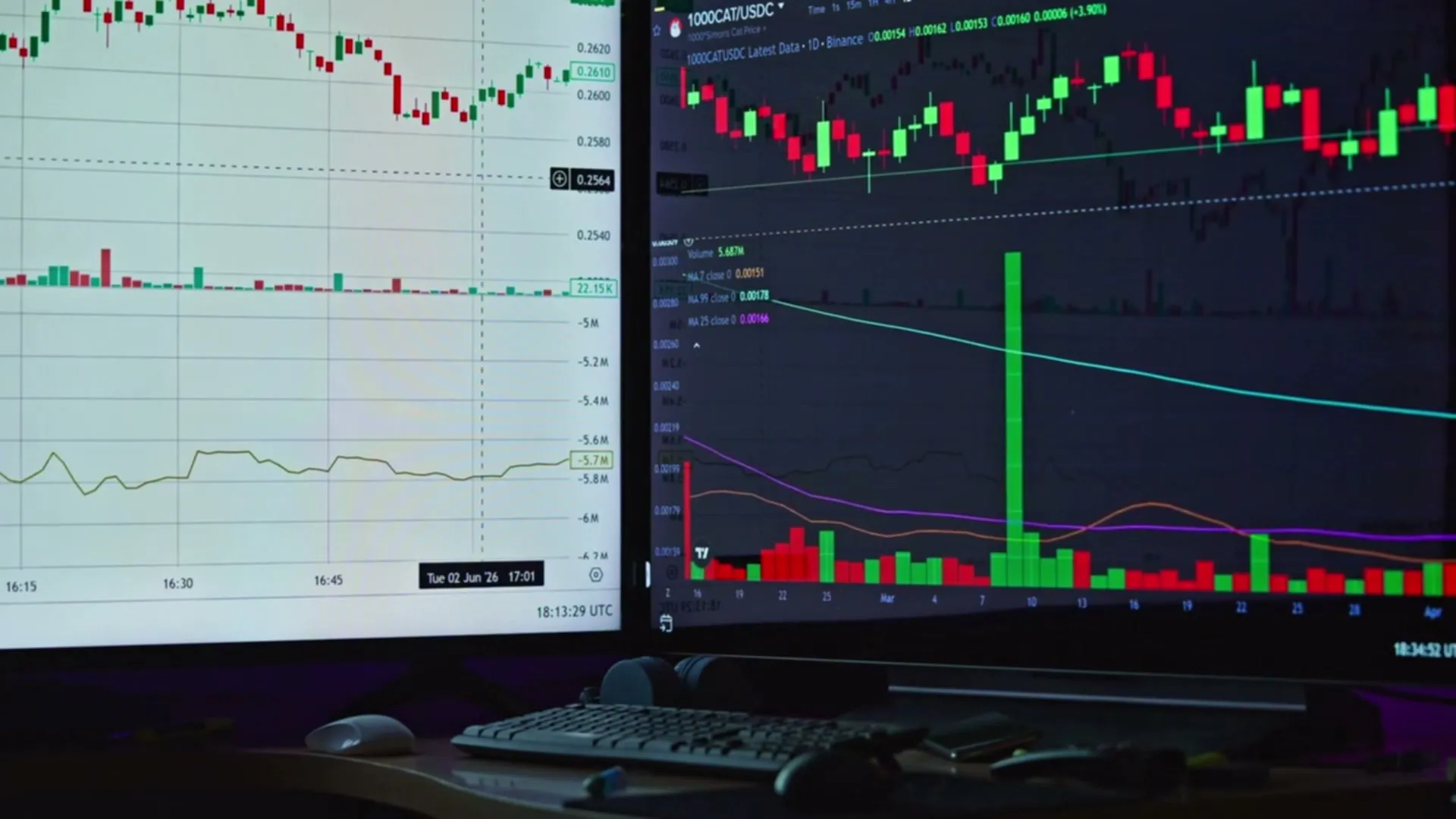 Figure 3: Visual detail and technical analysis corresponding to Active Management: The Path of the Quantitative Analyst and Portfolio Manager.
Active management is the playing field for finance professionals seeking the intellectual challenge and economic reward of beating the market. Here, the goal is not to replicate, but to generate alpha—a superior return to the benchmark. This requires a combination of deep analytical skills, market intuition, and robust technological infrastructure.
Behind every successful actively managed fund are multidisciplinary teams. Quantitative analysts, or “quants,” develop mathematical and algorithmic models to identify opportunities, manage risk, and execute trades. These professionals are engineers, mathematicians, statisticians, and data scientists with exceptional proficiency in Python, R, and MATLAB.
Their salaries reflect the demand for these skills. A junior quant at a hedge fund or investment bank can start earning between 180,000 annually, while a senior quant or a portfolio manager with a proven track record can easily exceed $500,000, reaching multi-million dollar figures with performance bonuses.
Equity research analysts delve into company financial statements, perform detailed valuations (DCF, multiples), and build predictive models. Their job is to identify undervalued or overvalued stocks. These roles are the gateway to investment banking and, subsequently, to private equity or hedge funds.
Portfolio managers are the pinnacle of active management. They not only select assets but also build and optimize entire portfolios, manage risk, and communicate with investors. Their compensation is directly tied to fund performance, with “2 and 20” structures (2% management fee and 20% of profits) being common in hedge funds.
Active management is a dynamic ecosystem that rewards innovation, insight, and impeccable execution. It is a high-pressure, high-reward environment where merit and the ability to generate real value are directly proportional to compensation. This is where the most lucrative and challenging careers in the financial sector are found.
The Human and Technological Factor: Where is True Value Generated?
 Figure 4: Visual detail and technical analysis corresponding to The Human and Technological Factor: Where is True Value Generated?.
The debate between active and passive management intensifies with the advent of artificial intelligence and machine learning. Many argue that AI can replicate or even surpass human analytical capabilities, taking passive management to a new level of sophistication and efficiency. However, the reality is more complex and opens new avenues for human talent.
AI is a powerful tool for active managers. It allows for processing massive volumes of unstructured data (news, social media, company reports), identifying patterns and anomalies that a human would take years to discover, and optimizing trade execution at unimaginable speeds. This doesn’t replace the manager; it empowers them.
True value is generated at the intersection of human ingenuity and computational power. Quants and managers who understand how to design, implement, and validate AI models, and who also possess the insight to interpret their results and adapt them to changing market conditions, are the most in-demand and highest-paid professionals.
The ability to build and maintain these systems is what differentiates elite professionals. It’s not just about applying pre-existing algorithms, but about innovating, creating new risk metrics, new alpha generation strategies, and understanding the limitations and biases of each model. This requires deep financial and technical knowledge.
Index funds benefit from automation and efficiency, but their mission is to replicate. Active management, supported by cutting-edge technology, seeks the edge—the competitive advantage that allows it to beat the market. This is what justifies higher salaries and complex bonus structures.
In the next decade, AI will not eliminate the need for managers, but rather raise the bar. Professionals who master both traditional finance and the tools of machine learning, big data, and high-performance computing will be the architects of future wealth, positioning themselves at the top of the salary pyramid.
Future Training: Positioning Yourself for the Next Decade
To position oneself in the financial elite of the next decade, training must be strategic and multifaceted. Forget traditional finance degrees that only cover basic economic theory. The market demands technical, analytical, and quantitative skills that enable the construction and management of complex models.
A degree in Computer Science, Mathematics, Statistics, or Engineering, complemented by a Master’s in Quantitative Finance (MSc Quant Finance) or an MBA with a specialization in Finance, is the ideal foundation. Programming is indispensable: Python with libraries like Pandas, NumPy, Scikit-learn, and TensorFlow is the new Latin of Wall Street.
Practical experience is as crucial as academic training. Seek internships at hedge funds, investment banks, prop trading firms, or quantitative risk departments. Participate in algo-trading competitions or machine learning challenges on platforms like Kaggle. Build your own portfolio of financial analysis projects.
Networking and mentorship are vital. Connecting with established professionals in the field not only opens doors but also provides invaluable insight into market trends, in-demand skills, and emerging opportunities. Attend FinTech and Quantitative Finance conferences.
The most lucrative roles are found in active management, especially in quantitative hedge funds and prop trading firms. Here, the ability to generate alpha through predictive models and algorithmic strategies is directly rewarded with substantial bonuses, which can exceed base salary by multiples.
The next decade will reward those who can combine mathematical rigor with technological agility and financial acumen. Active management, driven by artificial intelligence and quantitative analysis, not only offers the potential to outperform the market but also to build an extraordinarily rewarding and lucrative professional career.
Verdict and Strategic Lesson: Your Roadmap to Wealth
The verdict is clear: for the long-term passive investor, index funds are the superior choice, offering low cost, diversification, and a proven path to wealth accumulation. However, for the ambitious professional seeking an elite salary and an impactful career, active management is the battleground where true value is forged.
In the next decade, active management will not only make you wealthy through asset accumulation but will also position you for exceptional salary compensation. Roles such as quantitative analyst, portfolio manager, or financial data scientist offer the greatest growth opportunities and the highest salaries, easily exceeding $500,000 annually for experienced professionals.
The strategic lesson is dual: invest passively for your personal wealth, leveraging the efficiency of index funds. But for your career, bet on active management. Develop quantitative skills, master programming, understand machine learning, and seek roles that allow you to apply these capabilities to generate alpha.
Time is gold in this transformation. The skills gap between traditional professionals and quants is widening. Those who invest now in their quantitative finance and technology training will be the architects of the portfolios and models that will dominate the markets, securing their place at the top of the salary hierarchy.
Wealth in the next decade will not only be for those who invest wisely but for those who build and manage the systems that make such investment possible. The final verdict is that active management, driven by human talent and technology, is the most direct path for a professional towards an extraordinary career and wealth.
⚖️ Legal Notice & Disclaimer (Financial Disclaimer):
The content presented in this article is for strictly educational, training, and professional analysis purposes. The information contained herein does not, under any circumstances, constitute personalized financial advice, investment recommendation, or legal or tax advice. Any economic, training, or investment decision you make is at your sole responsibility. Always consult a certified financial advisor or professional before committing capital.
📺 Watch the video analysis
If you prefer to consume this content in audiovisual format with detailed graphics and step-by-step explanations, we invite you to watch our video on YouTube:
-> ▶️ Watch full video on YouTube
Interactive Brokers (IBKR)
La plataforma institucional de referencia para profesionales y gestores: acceso a más de 150 mercados globales, custodia regulada (SEC, FINRA, FCA) y comisiones ultrabajas en acciones, ETFs y futuros.
¿Prefieres el análisis en formato audiovisual?
We publish quantitative analysis, FinTech trends, and high-demand financial career skills every week.

About Equipo Carrera Financiera
Equipo editorial de Carrera Financiera dedicado a la investigación de mercados, modelos cuantitativos y habilidades profesionales de alto valor.
Artículos Relacionados
Ver todos ↗
90% of Traders LOSE Money: The TRUTH 'Academies' Conceal 📉
The world of retail trading is often presented as a fast track to financial freedom, but the statistical reality is stark: between 70% and 90% of individual traders consistently lose money. This article uncovers the uncomfortable truth behind this phenomenon.

The HIDDEN SALARY of a PE Director: Millions Beyond the Bonus? Uncover the Secret Wealth 💰🏢
This deep dive uncovers the intricate compensation structure of a Private Equity director, revealing how their true wealth, often exceeding $1M annually, is built on a sophisticated ecosystem of strategic incentives far beyond the typical bonus.