

Python vs. Excel: Why NO Elite Quant Uses Spreadsheets for Risk Management? The Automation Battle
Originally published by Carrera Financiera. Comprehensive and structured analysis for in-depth reading.
A single Excel spreadsheet error cost a banking giant $6.3 billion. If you believe Excel is sufficient for elite financial risk management, you’re standing on the edge of a financial precipice. The brutal reality is: no quant on Wall Street or in the City of London relies on Excel for risk modeling. And the reasons extend far beyond mere speed.
The Illusion of Control – Why Excel is a Risk in Itself
 Figure 1: Visual detail and technical analysis corresponding to The Illusion of Control – Why Excel is a Risk in Itself.
Excel’s promise lies in its accessibility and flexibility. Anyone can open a sheet, input data, and execute formulas. However, in the realm of quantitative risk management, this apparent advantage transforms into its greatest weakness. The scale of modern data—millions of price points, transaction volumes, and macroeconomic factors—simply overwhelms Excel’s capabilities.
A robust risk model requires processing gigabytes of historical data to calibrate parameters, simulate stress scenarios, and calculate metrics like Value at Risk (VaR) or Expected Shortfall (ES). Excel simply collapses. Its memory and processing limitations, coupled with the infamous “ghost spreadsheet” problem (hidden errors that propagate), make it inherently unsafe for decisions involving hundreds of millions of dollars.
Consider traceability. How do you audit an Excel risk model built by a team of ten people over a year, with nested formulas and VBA macros? It’s a nightmare. Errors become deeply embedded, undetectable until a market event exposes them, with catastrophic consequences. The lack of proper version control is another Achilles’ heel, leading to scenarios where “final_v2.xlsx” and “final_v3_real.xlsx” coexist, generating contradictory data.
Excel’s inability to handle unstructured data or complex APIs for real-time information renders it obsolete. An elite quant needs to integrate data feeds from Bloomberg, Refinitiv, or alternative providers—a trivial task in Python, but a headache in Excel. This isn’t a matter of preference; it’s about survival in a market that demands surgical precision and algorithmic speed.
The question is: if Excel is so deficient, why does it remain so ubiquitous in the financial world? The answer is complex, but fundamentally boils down to an entry barrier and legacy systems. Yet, this very barrier is precisely what separates junior risk operators from the financial architects who build the systems of the future.
The Anatomy of Quantitative Risk – Where Python Shines
 Figure 2: Visual detail and technical analysis corresponding to The Anatomy of Quantitative Risk – Where Python Shines.
If you’re looking to master the tools and models that separate junior analysts from elite salaries, subscribe to the channel: every week we break down quantitative strategies and high-level finance.
Risk management isn’t merely about calculating a standard deviation. It’s a multidisciplinary field demanding the computation of advanced metrics such as parametric, historical, or Monte Carlo VaR, Expected Shortfall (CVaR), model backtesting, stress tests, and scenario analysis. All these operations require computational power and algorithmic flexibility that Excel simply cannot provide.
Consider Monte Carlo VaR. To estimate the maximum loss with a 99% probability over a one-day horizon, a robust model might require 10,000 or 100,000 portfolio simulations. Each simulation involves sampling asset distributions, applying correlations, and recalculating the portfolio value. Attempting this in Excel is unfeasible. Python, with libraries like NumPy for vectorized operations and SciPy for statistical distributions, accomplishes this in seconds.
Backtesting is crucial for validating any risk model. It involves comparing actual losses with VaR predictions over time to ensure the model is correctly calibrated. A rigorous backtest can involve analyzing thousands of days of data, recalculating VaR with rolling windows. Python allows for the automation of this process, generating detailed reports and exception statistics—something unthinkable in a manual spreadsheet environment.
Stress testing and scenario analysis take risk management to the next level. What happens if oil prices drop by 30% while interest rates rise by 100 basis points? Modeling these interconnected scenarios, which affect different asset classes and derivatives, requires a computational engine capable of handling complex equations and non-linear dependencies. Python, with its flexibility for building custom models, is the tool of choice.
Furthermore, Python’s ability to integrate with SQL databases, market APIs, and order execution systems allows for the construction of a truly automated and real-time risk management ecosystem. This is fundamental for portfolio managers who need to make rapid decisions based on up-to-date data. How can the integrity of a risk model be maintained when it’s decentralized across dozens of Excel files? The answer is: it cannot.
Automation and Reproducibility – Python’s Unbeatable Advantage
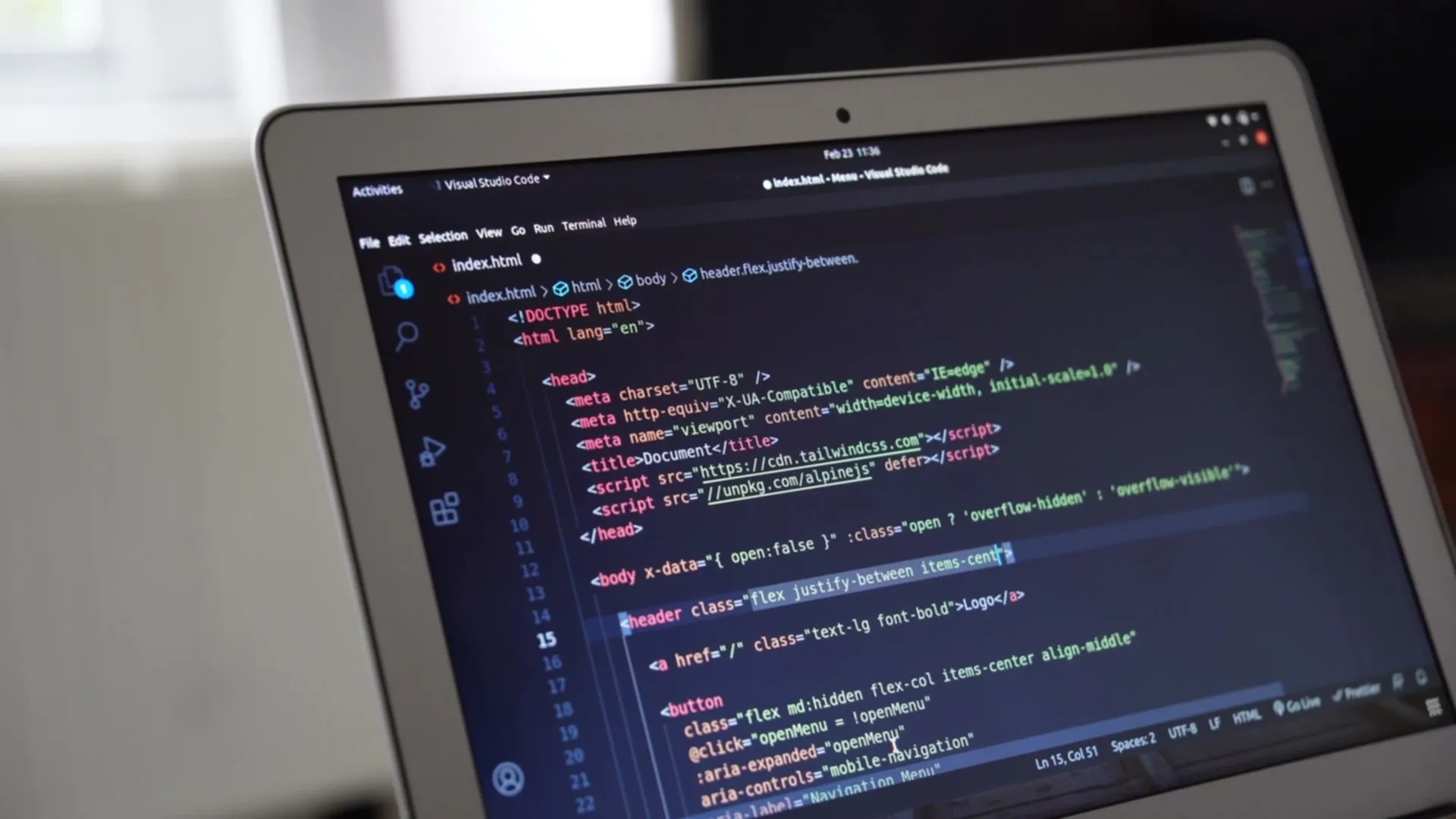 Figure 3: Visual detail and technical analysis corresponding to Automation and Reproducibility – Python’s Unbeatable Advantage.
Reproducibility is the cornerstone of science, and in quantitative finance, it’s the foundation of trust. Every calculation, every analysis, every risk model must be reproducible by any team member. In Python, this is achieved through well-documented scripts and version control (Git). A script is a recipe. You run the script, you get the same result, every time.
Automation is another area where Excel cannot compete. Elite quants don’t just calculate risk; they integrate it into algorithmic systems that execute orders, rebalance portfolios, or adjust hedges. Python is the preferred language for building these algorithms, enabling direct connection to broker APIs, execution of strategies based on calculated risk, and automatic report generation.
Imagine a daily risk report summarizing portfolio exposure, VaR, CVaR, and stress tests. In an Excel environment, this could require hours of manual work, copy-pasting, and the inherent risk of human error. With Python, a script can execute all these tasks in minutes, be scheduled to run automatically at market close, and send the report to stakeholders. This frees quants for the true work of analysis, not tedious data collection.
Python’s ability to create complete data pipelines, from raw data ingestion to interactive results visualization, makes it an integrated platform for risk management. It’s not just a tool; it’s an ecosystem. This allows financial firms to scale their risk operations without exponentially increasing costs or personnel.
The risk infrastructure of large financial institutions relies on complex systems where Python acts as the glue connecting different components: databases, pricing models, execution systems, and reporting platforms. Attempting to replicate this architecture with spreadsheets would be like building a skyscraper with toothpicks.
Interactivity is another factor. Python allows for the creation of dynamic dashboards where risk managers can explore different scenarios, adjust assumptions, and gain real-time insights. This facilitates a much deeper and more nuanced dialogue about risk than any static Excel report.
The Skills Gap – Why Your Career Depends on Python
 Figure 4: Visual detail and technical analysis corresponding to The Skills Gap – Why Your Career Depends on Python.
The demand for quants and risk analysts with strong Python skills has skyrocketed. Job postings for elite roles in hedge funds, investment banks, and asset managers rarely list Excel as a primary skill, except for administrative tasks. Instead, Python, alongside SQL, R, and C++, forms the foundation.
The financial job market has evolved. It’s no longer enough to understand risk concepts; one must be able to implement, test, and automate them. A professional who only handles Excel is, in essence, limited to being a data operator, not a solutions architect. This directly translates into a salary ceiling and limited growth opportunities.
Elite quants not only use Python but contribute to its ecosystem. They develop internal libraries, optimize algorithms, and build data infrastructures. This is a natural evolution of their role, moving from mere tool users to tool creators, which gives them a brutal competitive advantage.
The transition from Excel to Python is not a luxury; it’s a necessity. It involves an investment in time and effort to learn programming fundamentals, specific financial libraries (Pandas, NumPy, SciPy, Matplotlib, Seaborn, yfinance), and software engineering principles (version control, unit testing). But this investment is the passport to the most influential and best-compensated positions in the sector.
The salary difference is abysmal. A quant with advanced Python and modeling skills can expect starting salaries exceeding 100,000 euros or dollars annually, rapidly scaling to figures of 200,000 or 300,000 euros/dollars with experience. For an analyst limited to Excel, the ceiling is much lower, often stagnating in the 40,000 to 70,000 range, with less progression.
Large quantitative trading firms and sophisticated hedge funds no longer hire people who “know Excel.” They hire financial engineers and data scientists who can build tomorrow’s risk systems. The question is no longer “if” you should learn Python, but “how long will it take you” to do so to avoid becoming obsolete.
Verdict and Strategic Lesson
The verdict is inescapable and categorical: for elite quantitative risk management, Excel is a dangerous relic. It is not a competitive tool, but a liability. Its inability to handle scale, complexity, automation, and reproducibility completely disqualifies it from modern risk operations that move trillions of dollars.
The strategic lesson for any financial professional is clear: fluency in Python is not optional; it is a fundamental requirement. It is the language that allows quants not only to analyze risk but to build the systems that mitigate, optimize, and monetize it. It is the difference between observing the market and shaping it.
The future of finance is algorithmic, and risk is its most critical component. If you aspire to a career at the pinnacle of finance, mastering the models and strategies that define the elite, then Python must be your primary tool. It’s not just a skill; it’s a mindset, a way of approaching financial problems with computational precision and unlimited scalability. It’s time to leave the spreadsheet behind and embrace the power of intelligent automation.
⚖️ Legal Notice & Disclaimer (Financial Disclaimer):
The content presented in this article is strictly for educational, training, and professional analysis purposes. The information contained herein does not constitute, under any circumstances, personalized financial advice, investment recommendation, or legal or tax advice. Any economic, training, or investment decision you make is under your sole responsibility. Always consult a certified financial advisor or professional before committing capital.
📺 Watch the Video Analysis
If you prefer to consume this content in audiovisual format with detailed graphics and step-by-step explanations, we invite you to watch our video on YouTube:
-> ▶️ Watch the full video on YouTube
Interactive Brokers (IBKR)
La plataforma institucional de referencia para profesionales y gestores: acceso a más de 150 mercados globales, custodia regulada (SEC, FINRA, FCA) y comisiones ultrabajas en acciones, ETFs y futuros.
¿Prefieres el análisis en formato audiovisual?
We publish quantitative analysis, FinTech trends, and high-demand financial career skills every week.

About Equipo Carrera Financiera
Equipo editorial de Carrera Financiera dedicado a la investigación de mercados, modelos cuantitativos y habilidades profesionales de alto valor.
Artículos Relacionados
Ver todos ↗
Your Investment Portfolio Is NOT SAFE: How Family Offices SHIELD Capital with the Anti-Crisis 'Dragon Method'
In-depth analysis on why your investment portfolio isn't safe and how family offices shield capital using the anti-crisis 'Dragon Method' on carrerafinanciera.

The Salary Quantum Leap: How Three Financial Modeling Skills Will Double Your Market Value
Detailed analysis on achieving a salary quantum leap: discover how three essential financial modeling skills will double your market value, exclusively on carrerafinanciera.